Author: Debbie Granger
Why Do We Light Candles at Mass?
Being Catholic | Why Do We Light Candles at Mass?
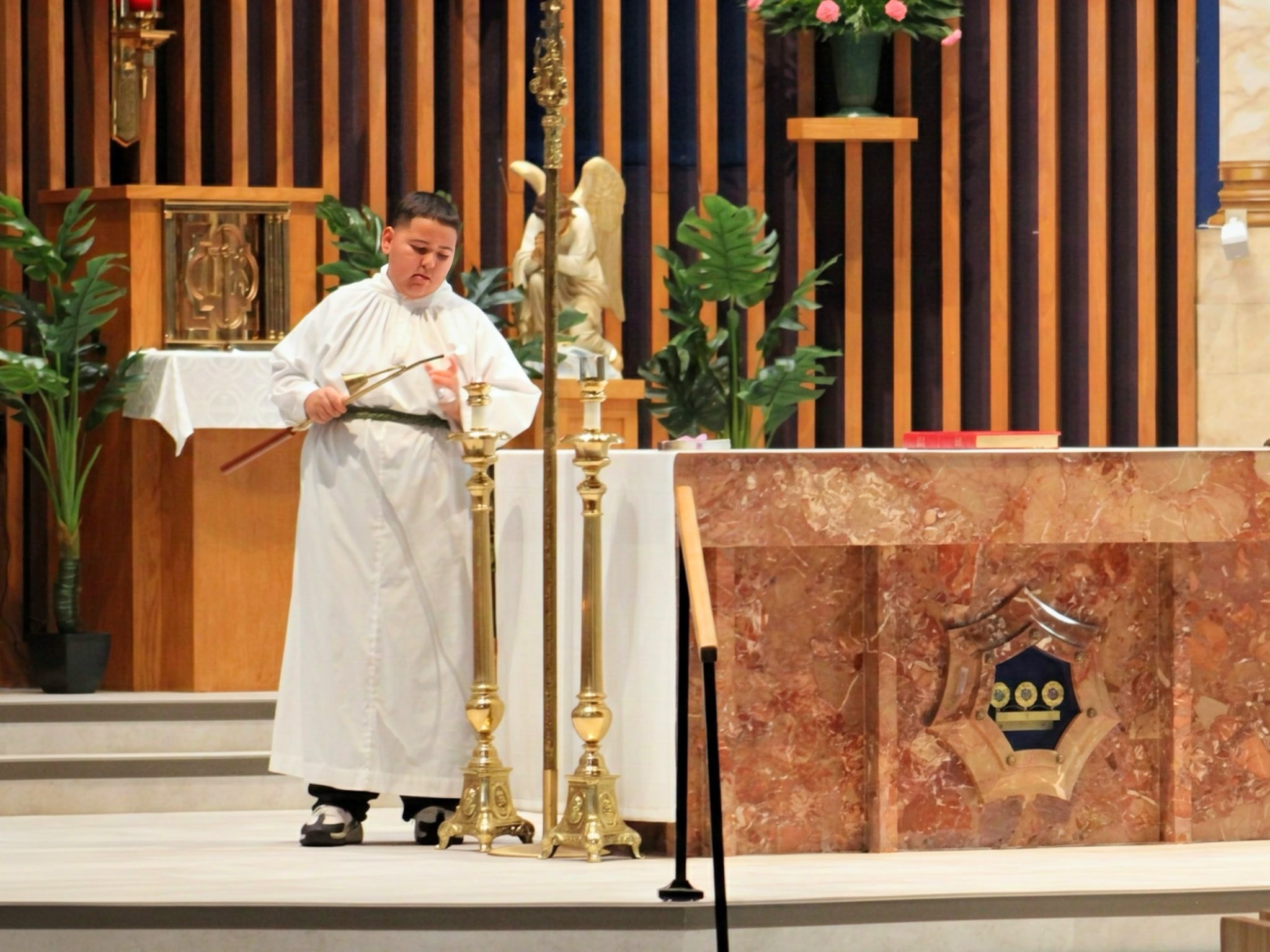
Have you ever watched an altar server light the candles before Mass and wondered why we do this? Those small flames help us prepare our hearts for what we’re about to celebrate.
1. They remind us that Jesus is the Light of the World.
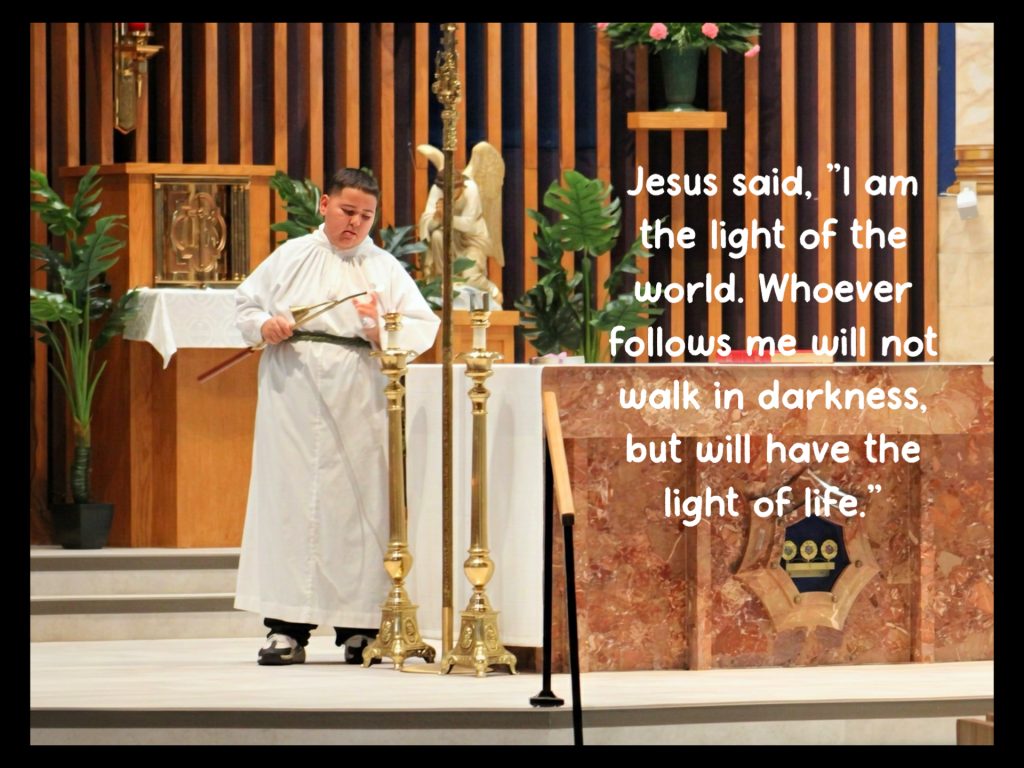
Jesus tells us, “I am the light of the world” (John 8:12). Candlelight also reminds us of our Baptism, when a candle is lit from the Paschal candle as a sign that we share in the light of Christ.
2. They express reverence and joy.
The Church calls for lighted candles on or near the altar at Mass. Their light honors the altar where we celebrate the Eucharist and expresses the joy of gathering to worship God.
3. Even the wax, wick, and flame have meaning.
In a traditional Catholic interpretation, the beeswax represents the body Jesus received from the Virgin Mary, the wick represents His human soul, and the flame represents His divinity.
4. They can help us reflect on prayer and sacrifice.
When we light a candle for someone, the flame is a visible sign of the prayer we offer for them. At Mass, as the candle gives light and its wax is gradually consumed, it can also invite us to reflect on Jesus’ gift of Himself to the Father for us.
5. The number of candles can vary.
At least two candles are lit at Mass. Four or six may be used, especially on Sundays and holy days of obligation. Seven are used when the diocesan bishop celebrates Mass in his own diocese.
The next time you see the candles being lit before Mass, you might make their light a quiet prayer of your own. Jesus, Light of the World, help me carry Your light to others.
Trust in God With Your Future
The Catechism teaches that all forms of divination—including horoscopes, astrology, palm reading, and consulting mediums—are to be rejected. These practices seek hidden knowledge or power over the future and conflict with the honor, reverence, and loving trust we owe to God alone. We are called to entrust our lives and our future to Him.
(Divination is the art, practice, or gift of seeking to foresee future events, discover hidden knowledge, or find answers to questions through supernatural powers, omens, or intuitive methods.)
From the Catechism of the Catholic Church
2116 All forms of divination are to be rejected: recourse to Satan or demons, conjuring up the dead or other practices falsely supposed to “unveil” the future.⁴⁸ Consulting horoscopes, astrology, palm reading, interpretation of omens and lots, the phenomena of clairvoyance, and recourse to mediums all conceal a desire for power over time, history, and, in the last analysis, other human beings, as well as a wish to conciliate hidden powers. They contradict the honor, respect, and loving fear that we owe to God alone.
Regarding Hostilities
A Special Message from Father Bob
October 18, 2026
Regarding the hostilities that have been shown towards the Catholic Church in Lebanon, with the desecration of our statues and the street preachers who have shown up at St. Mary’s and over at St. Cecilia’s, I’ve advised Bishop Senior and Monsignor Quinlan, the Vicar General, and our Diocesan Attorney of the situation.
If the street preachers show up again outside on the sidewalk, basically what they do is simply tell us we’re wrong, and they have a right to do that. So simply ignore them.
Jesus said, if they’re going to hate Me, they’re going to hate you as well. As long as they are preaching and acting within their constitutional rights, they have the right to do that.
If they step out of line and become more aggressive, then we will take some legal action. But the bishop is aware of some of the hostilities that are going on here in Lebanon, and we are monitoring the situation very carefully.
I don’t think those are hostilities that endanger any of us. It’s just showing animus in this world in which we live—animus towards the Catholic Church.
We’re about the last castle to be conquered. And so be a good, strong, courageous missionary out there.
—Father Bob
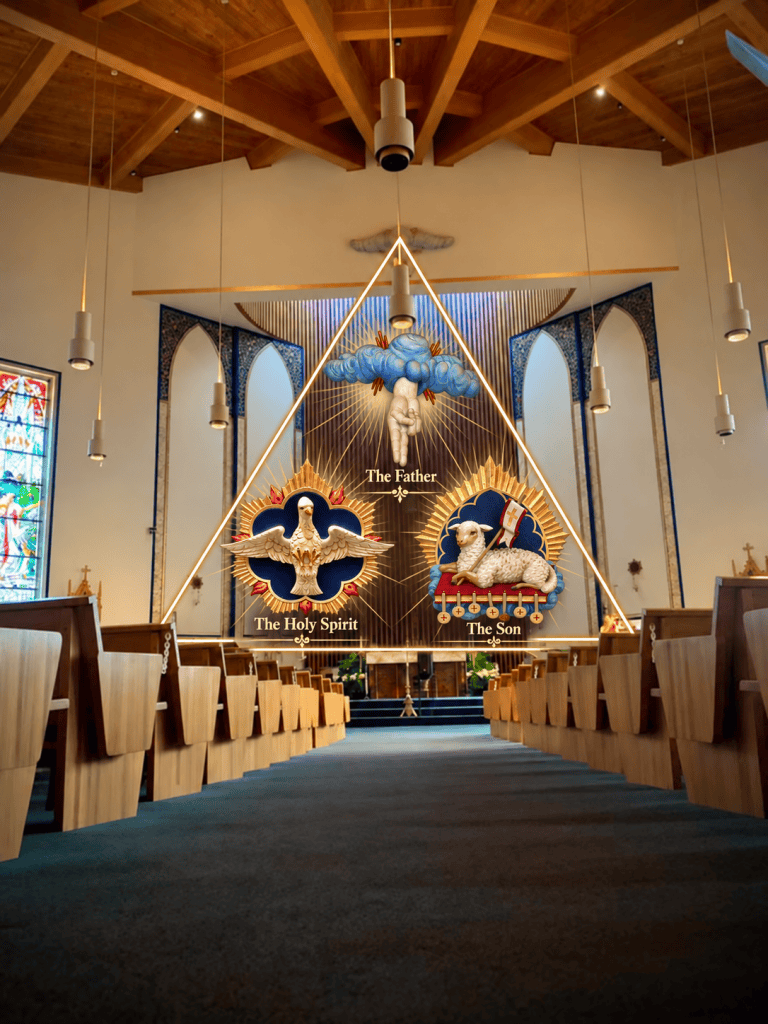
The Holy Trinity at St. Mary’s
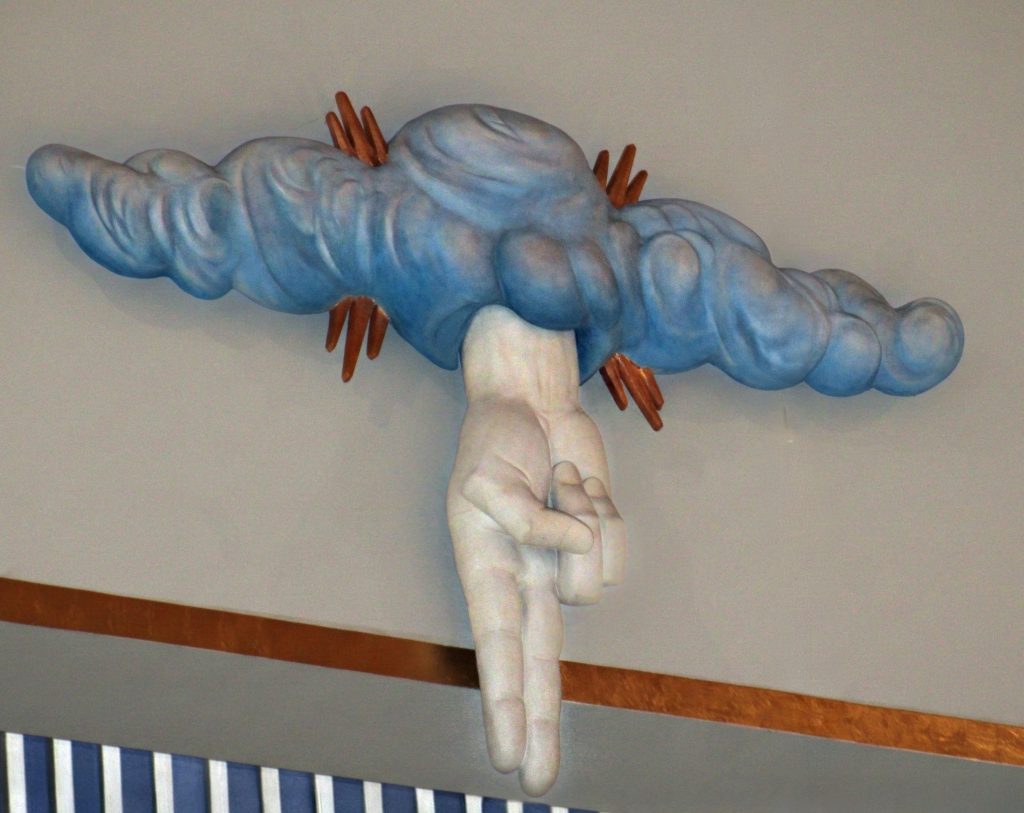
By imagining lines connecting three sacred symbols—from the Hand of God above, down to the Dove on the left, across to the Lamb on the right, and back up—we can trace a triangle, a traditional symbol of the Holy Trinity.
These symbols invite us to reflect on the central mystery of our faith: one God in three Divine Persons—Father, Son, and Holy Spirit. Each also holds a place in our parish’s story.
The Hand — God the Father
High above the Assumption scene, a hand extends downward from a cloud, with two fingers outstretched and the remaining fingers folded. The hand is an ancient symbol used to represent God the Father, while the four lightning bolts emerging from the cloud signify His presence.
According to our parish history, this Hand was the only new piece of statuary created for the interior of our present church—the third church in our parish’s history.
The vertical wooden pieces beneath it suggest downward movement, just as those behind the Assumption scene suggest Mary’s movement upward. Here, that downward movement represents the Father sending His Son and the Holy Spirit into the world.
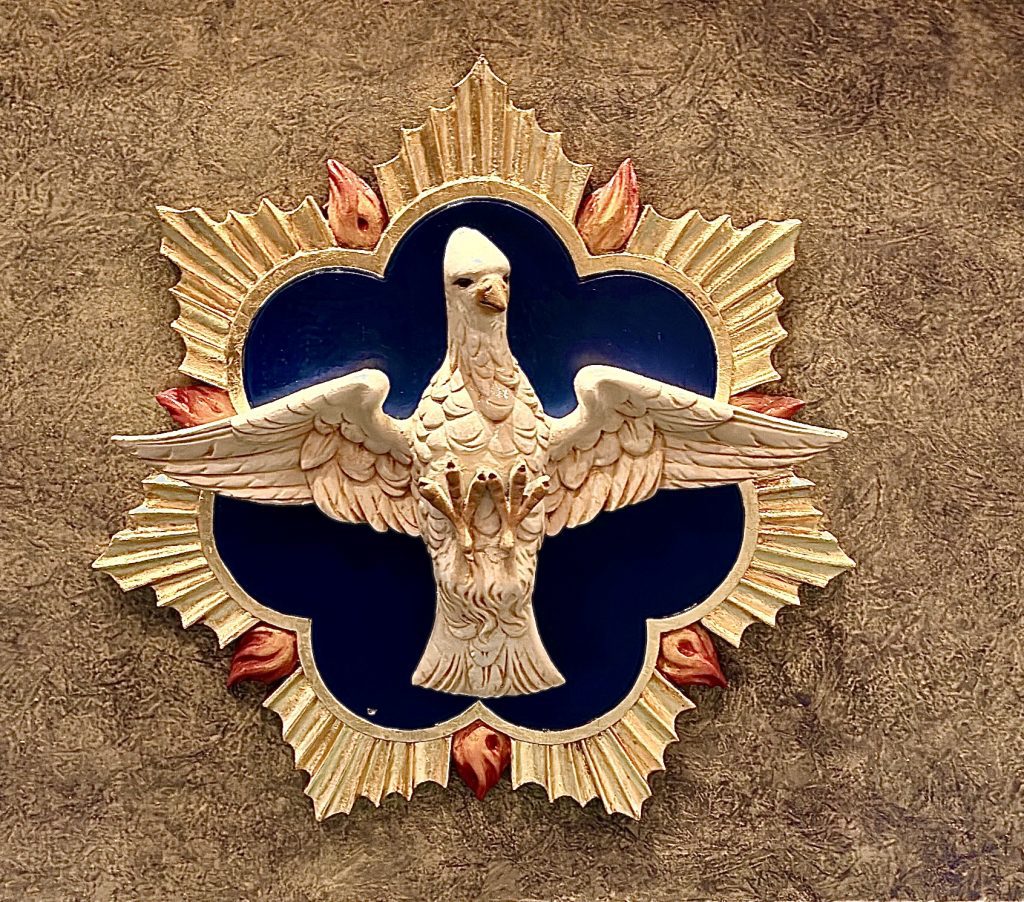
The Dove — God the Holy Spirit
The dove has occupied a different place in each of our three churches. In the first, it was positioned on the ceiling in the center of the sanctuary. In the second, it was placed above the Assumption scene. Today, it is affixed to the front of the pulpit.
The dove recalls the Holy Spirit descending upon Jesus at His baptism. Its placement on the pulpit offers a meaningful reminder that the Holy Spirit is at work through the proclamation of God’s Word and the celebration of the sacraments.
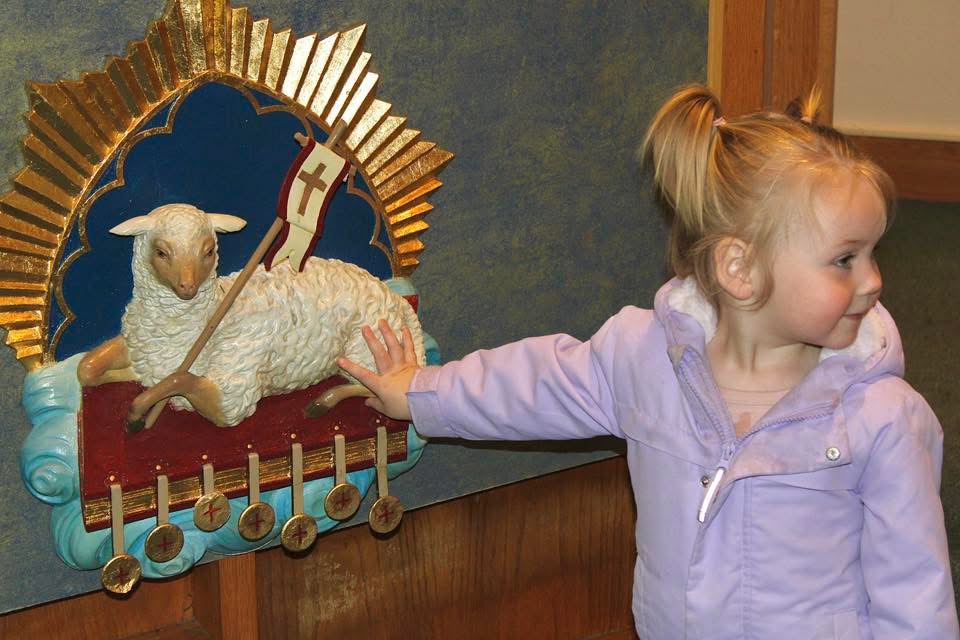
The Lamb — God the Son
The lamb represents Jesus Christ, the Lamb of God, Who takes away the sins of the world. His banner bearing the cross proclaims His victory over sin and death. The book beneath Him, with its seven seals, recalls the Book of Revelation.
The next time you are in church, take a moment to look at these meaningful details. They do more than adorn St. Mary’s; they connect our parish’s history with the faith we profess each time we make the Sign of the Cross: in the name of the Father, and of the Son, and of the Holy Spirit.
From the Pulpit
📣 Parish Announcements
Parish Announcements · Sunday, November 8, 2026
From Deacon Wentzel
Thank You for Supporting the Christmas Bazaar
Thank you to everyone who helped make the Council of Catholic Women’s Christmas Bazaar a success! Basket raffle tickets will be available until the drawing after Mass this morning.
CCW Christmas Dinner · Wednesday, December 2
The Council of Catholic Women’s Christmas dinner will be held in Frederick Hall. Tickets are $25 and are available from the parish office.
Diocesan Youth Conference · Saturday, November 21
Students in grades 7–12 are encouraged to attend the annual Diocesan Youth Conference. Bus transportation will be provided to and from the conference. See the bulletin for details, and invite a friend!
Parents, please encourage your teens to attend. Our parish’s formal religious education program runs through eighth grade, and the conference gives high school students an opportunity to grow in their Catholic faith alongside other teens.
LCCM Food Collection · November 14–15
Our next food collection for Lebanon County Christian Ministries will take place the weekend of November 14–15.
Diocesan Annual Campaign
Our parish still needs $10,000 to reach this year’s goal of $74,300. First-time donors can pick up campaign materials in the narthex. If you give through a coupon book, please consider making an extra payment to help us reach our goal.
Ignite Campaign Update from Father Bob
Father Bob explained that our parish’s $810,000 Ignite Campaign goal is a fundraising target. All gifts are voluntary, and the parish faces no penalty if we fall short. The campaign will help strengthen the diocese’s financial future.
Father Bob will attend an Ignite Campaign dinner in Harrisburg this week and share more information when he returns.
The Triple Sign of the Cross
✝️ WHY THREE SMALL CROSSES BEFORE THE GOSPEL?
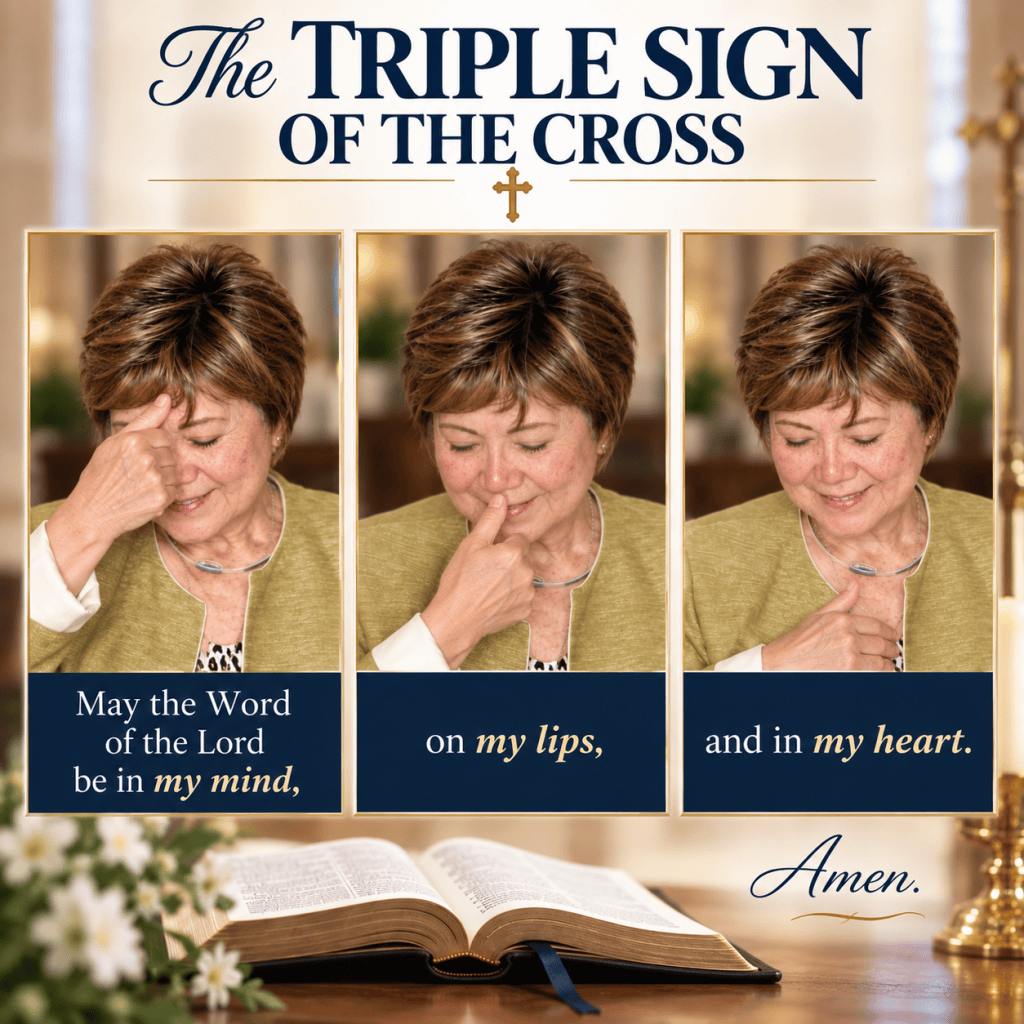
Before the Gospel is proclaimed at Mass, Catholics make a small Sign of the Cross on the forehead, lips, and heart.
Each is a simple prayer:
✝️ Forehead: Lord, help me understand Your Word.
✝️ Lips: Lord, help me proclaim Your Word.
✝️ Heart: Lord, help me receive and live Your Word.
MIND • WORDS • HEART
It’s a beautiful reminder that the Gospel is meant not only to be heard, but to change how we think, speak, and live.
What is Grace?
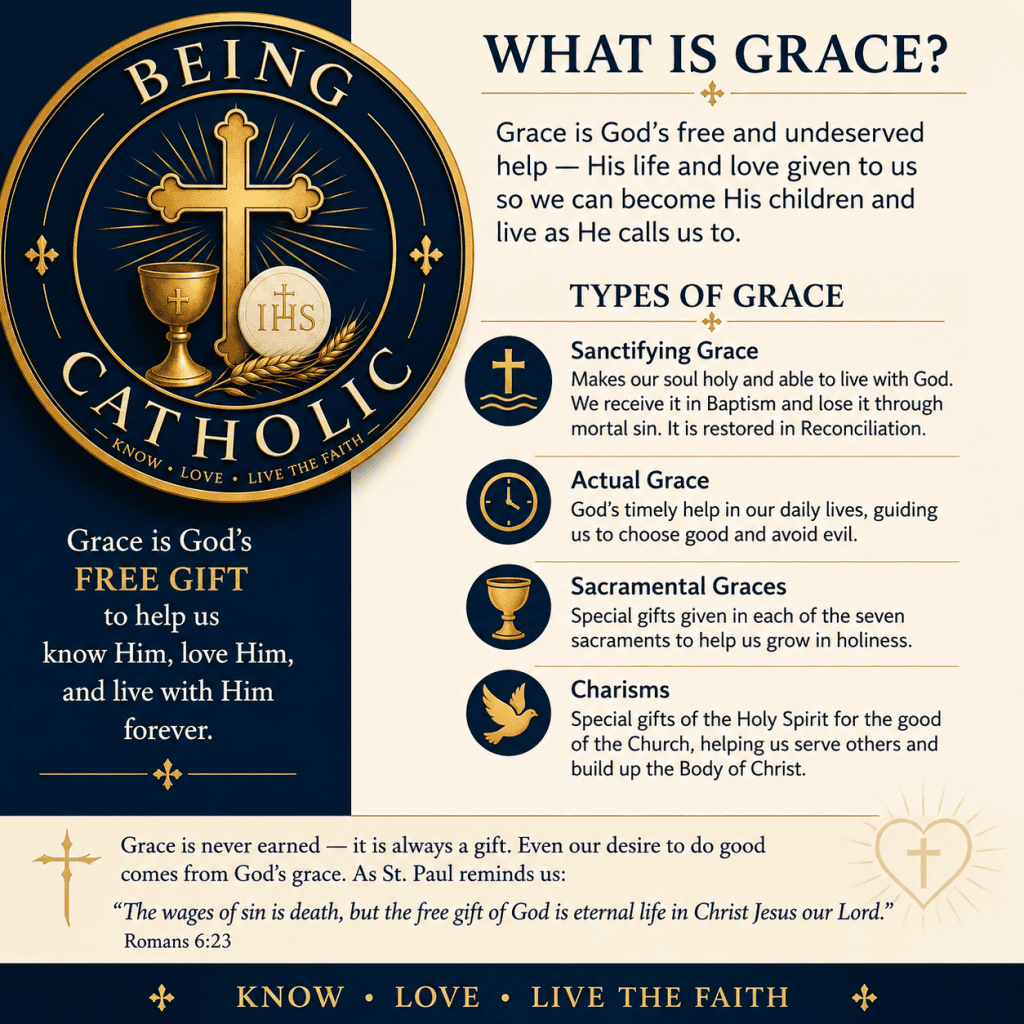
The Catechism describes grace as the “free and undeserved help that God gives us to respond to His call” (CCC 1996). Through grace, God shares His divine life with us and gives us the help we need to grow in holiness.
The Church helps us understand grace in several ways:
Sanctifying Grace is the gift of God’s own life within our souls. We first receive sanctifying grace in Baptism. It is lost through mortal sin and restored through the Sacrament of Reconciliation.
Actual Grace is God’s help at particular moments in our lives. It may prompt us to do something good, resist temptation, forgive someone, pray, or turn back toward God.
Sacramental Graces are special gifts associated with each of the seven Sacraments, helping us live out the purpose of that Sacrament.
Charisms are special graces of the Holy Spirit given for the good of others and the building up of the Church. These may include gifts for teaching, service, leadership, encouragement, or other ways of serving the Body of Christ.
Grace Is a Gift
We do not earn God’s grace. We cannot purchase it or make God owe it to us. Grace begins with God. Even our desire to turn toward Him and do what is good is made possible by His grace.
Yet God does not force us. He gives us the freedom to respond to His grace and cooperate with it.
That means grace is not simply something we receive at Baptism and never think about again. God’s grace is at work throughout the Christian life—calling us, strengthening us, forgiving us, and helping us become the people He created us to be.
“The wages of sin is death, but the free gift of God is eternal life in Christ Jesus our Lord.” — Romans 6:23
St. Augustine: “The law detects, grace alone conquers sin.”
St. Ignatius of Loyola: “Give me only Your love and Your grace, with these I will be rich enough, and will desire nothing more.”
St. Anthony: “Let us therefore pray to our Lord Jesus Christ that he give us the grace to seek His Kingdom and to build within ourselves a moral Jerusalem.”
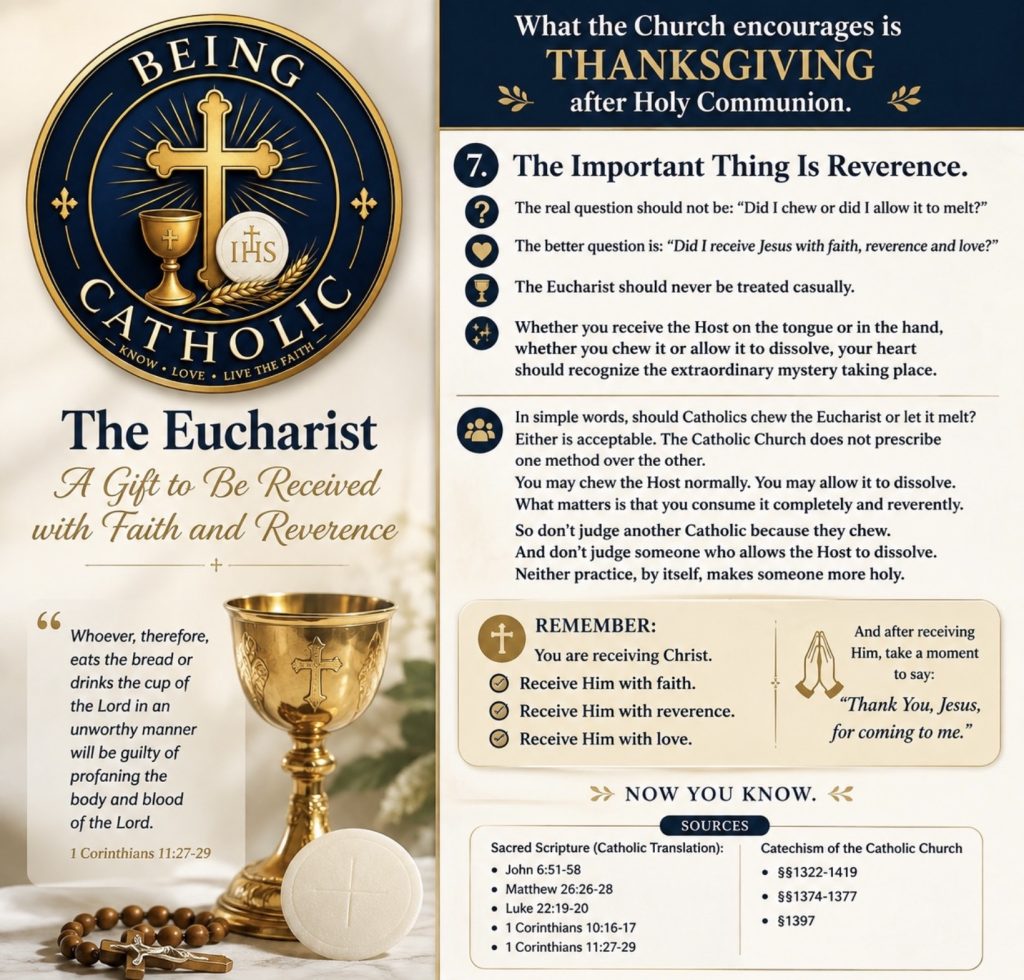
Is it Ok to Chew the Eucharist?
What Catholics Should Know About Receiving the Eucharist
Whether you receive the Host on the tongue or in the hand, whether you chew it or allow it to dissolve, your heart should recognize the extraordinary mystery taking place.
The real question should not be: “Did I chew or did I allow it to melt?”
The better question is: “Did I receive Jesus understanding that this is the real presence of Jesus…., body, soul and divinity?
Jesus is fully present under the appearance of simple bread and wine so should never be treated casually.
Whether you receive the Host on the tongue or in the hand, whether you chew it or allow it to dissolve, your heart should recognize the extraordinary mystery taking place.
The Catholic Church does not prescribe one method over the other. Neither practice, by itself, makes someone more holy.
You are receiving Christ.
Receive Him with faith.
Receive Him with reverence.
Receive Him with love.
“May this Holy Communion bring about a perfect union with You, the one true God, and at last enable me to reach eternal bliss when You will call me.” ST. THOMAS AQUINAS