
Holy Days of Obligation

Holy Days of Obligation are special solemnities on which Catholics are called to participate in the celebration of Mass, just as we do each Sunday. The Church sets aside these days so that we may celebrate and enter more deeply into some of the great mysteries of our faith and honor important events in the lives of Jesus, Mary, and the saints. The Catechism teaches that Catholics are bound to participate in Mass on Sundays and other holy days of obligation.

Holy Days of Obligation

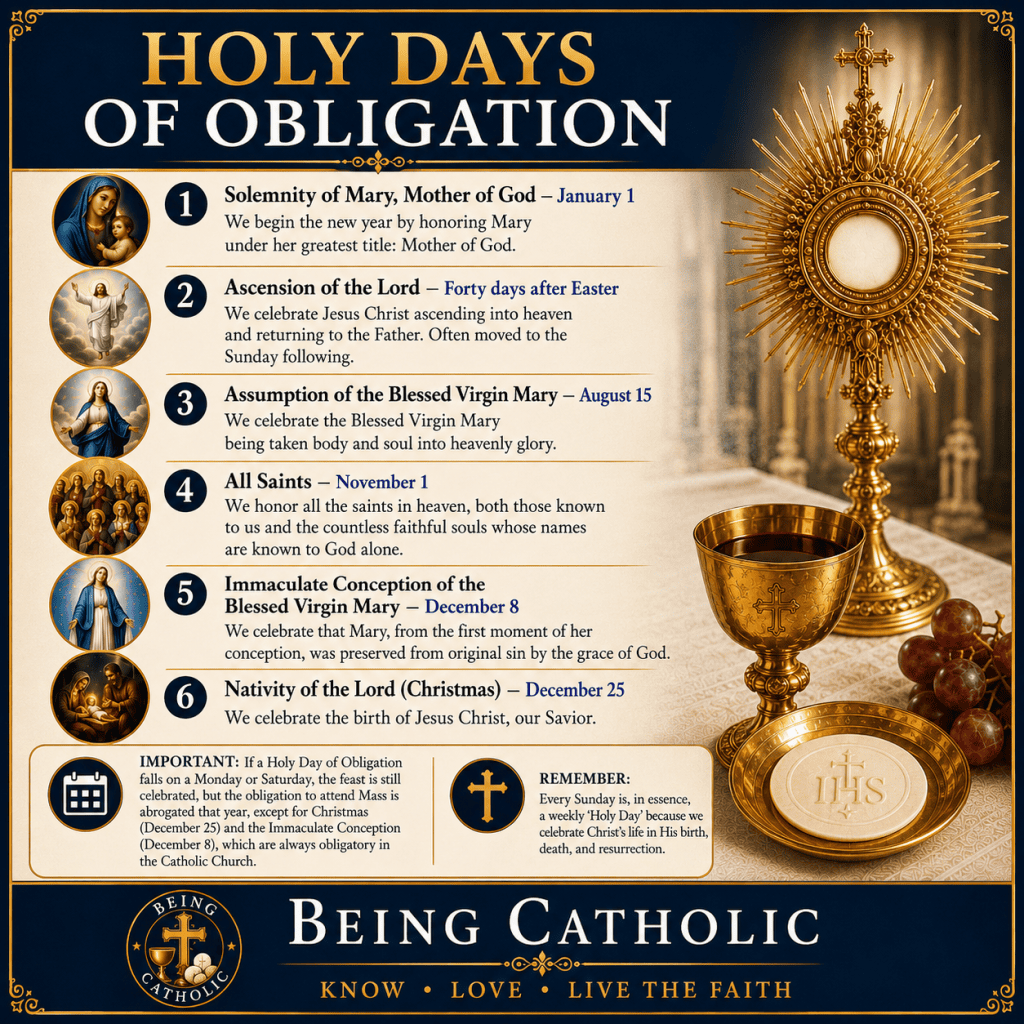
Solemnity of Mary, Mother of God – January 1. We begin the new year by honoring Mary under her greatest title: Mother of God.

The Ascension of the Lord – Forty days after Easter. We celebrate Jesus Christ ascending into heaven and returning to the Father.

The Assumption of the Blessed Virgin Mary – August 15. We celebrate the Blessed Virgin Mary being taken body and soul into heavenly glory.

All Saints – November 1. We honor all the saints in heaven, both those known to us and the countless faithful souls whose names are known to God alone.

The Immaculate Conception of the Blessed Virgin Mary – December 8. We celebrate that Mary, from the first moment of her conception, was preserved from original sin by the grace of God.

The Nativity of the Lord – Christmas – December 25. We celebrate the birth of Jesus Christ, our Savior.

What does “obligation” mean?

On Sundays and holy days of obligation, Catholics are called to participate in Mass and to set aside unnecessary activities that interfere with worship, the joy proper to the Lord’s Day, and appropriate rest.

Every Sunday Is a Holy Day

Sunday remains the primary holy day for Christians because it is the day of Christ’s Resurrection. The Sunday Eucharist lies at the heart of Catholic life and worship.

Holy Days Link

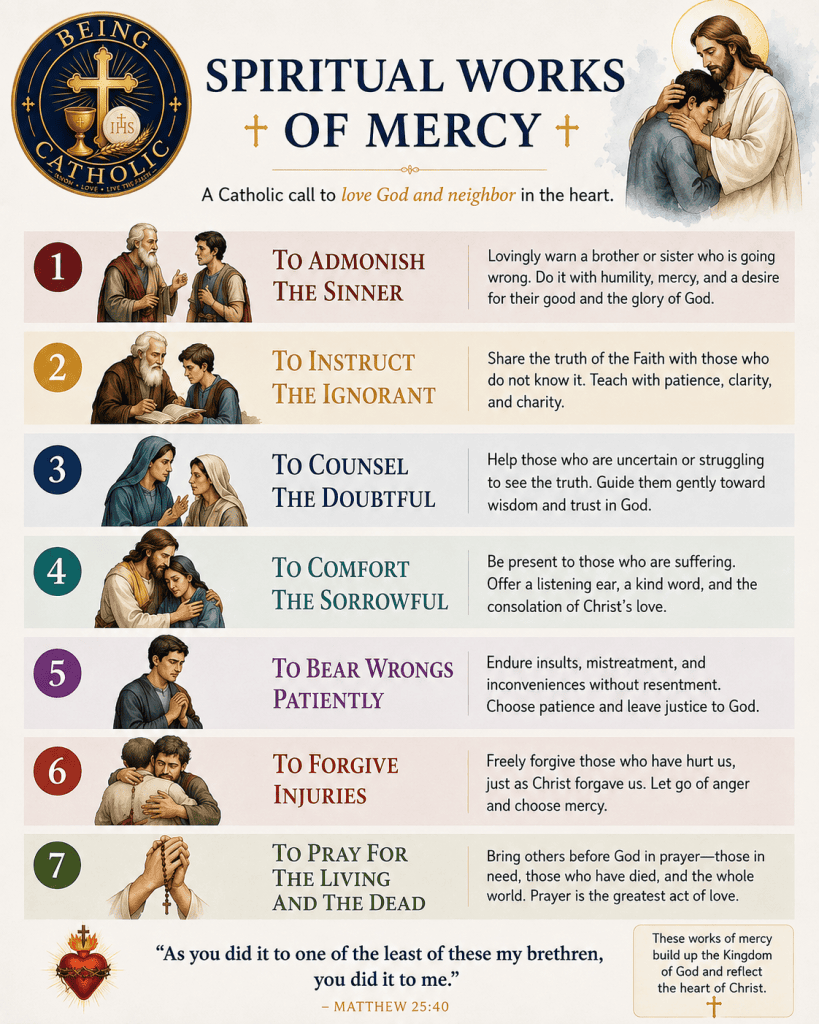
✝️The Spiritual Works of Mercy

The Spiritual Works of Mercy have long been part of the Christian tradition. Just as Jesus cared not only for the physical needs of those He encountered, but also for their spiritual well-being, we are called to do the same.

The Spiritual Works of Mercy teach us practical ways to love our neighbor by caring for the needs of the heart and soul:

  1. To admonish the sinner
  2. To instruct the ignorant
  3. To counsel the doubtful
  4. To comfort the sorrowful
  5. To bear wrongs patiently
  6. To forgive injuries
  7. To pray for the living and the dead

These works remind us that mercy is more than feeling compassion for another person. Mercy calls us to action—to share truth with love, offer guidance and encouragement, forgive those who hurt us, patiently endure difficulties, comfort those who suffer, and bring the needs of others before God in prayer.

Some of these works can be challenging, especially admonishing the sinner. The Church does not call us to judge or condemn others. Rather, when appropriate, we are called to help one another recognize what leads us away from God—always with humility, charity, and concern for the other person’s good.

Likewise, bearing wrongs patiently does not mean that we must accept abuse or remain silent in the face of serious injustice. It reminds us not to respond to every hurt with anger, resentment, or retaliation.

Through the Spiritual Works of Mercy, ordinary conversations, acts of forgiveness, words of encouragement, patient listening, and prayer can become ways of bringing Christ’s mercy into the lives of others.

Being Catholic means not only receiving God’s mercy, but allowing His mercy to flow through us to others.

Read more hereThe Spiritual Works of Mercy

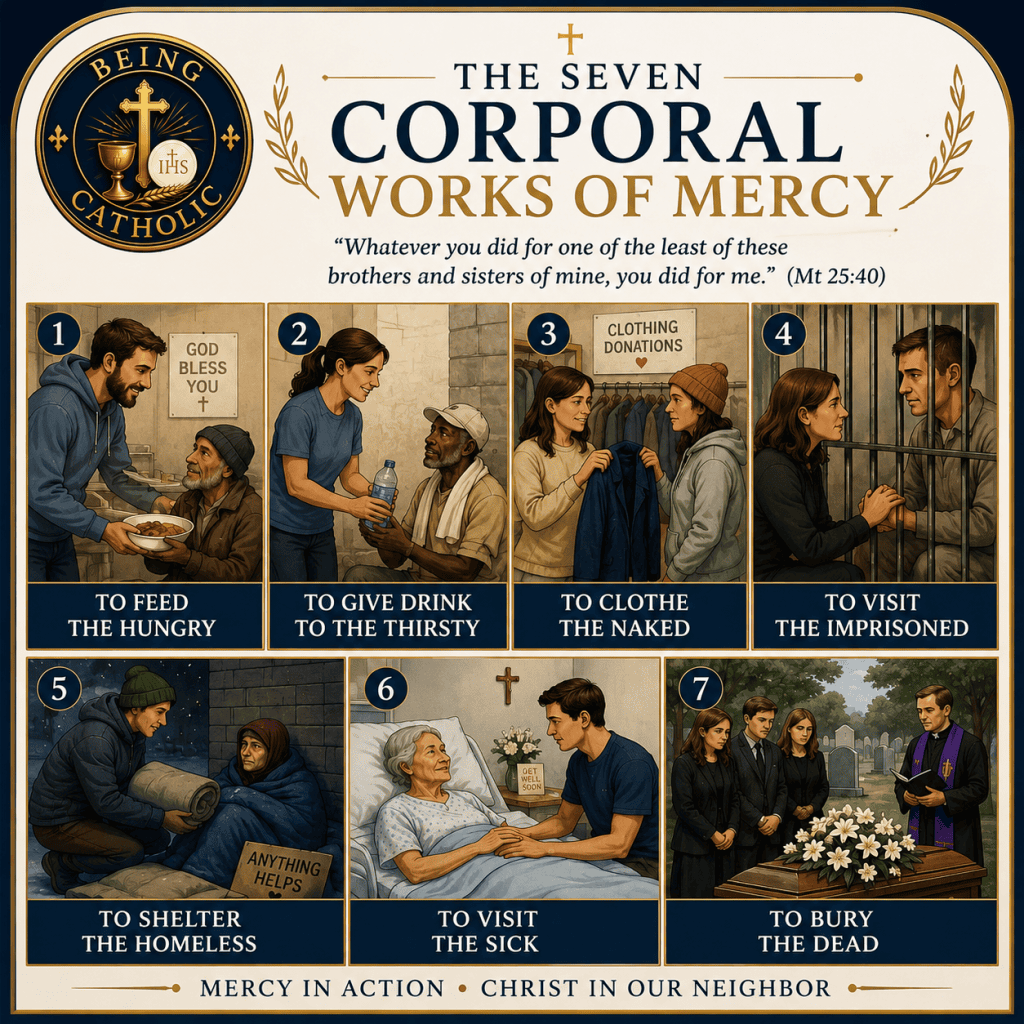
✝️Corporal Works of Mercy

In Catholic teaching, corporal works are acts of mercy that care for the physical and bodily needs of other people.

The word corporal comes from the Latin corpus, meaning body. So the Corporal Works of Mercy are ways we serve Christ by caring for the bodily needs of our neighbors—food, water, clothing, shelter, companionship in sickness or imprisonment, and burial of the dead.

They are rooted especially in Matthew 25:35–40, where Jesus says:

“Whatever you did for one of these least brothers of mine, you did for me.”

They are called the Seven Corporal Works of Mercy:

  1. Feed the hungry
  2. Give drink to the thirsty
  3. Clothe the naked
  4. Shelter the homeless
  5. Visit the sick
  6. Visit the imprisoned
  7. Bury the dead