


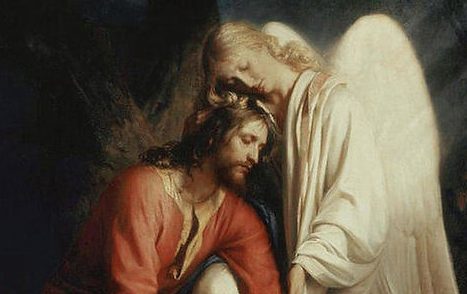
Reflections on Sorrow by Reverend Robert Gillelan
CLICK HERE TO SEE VIDEO 🔺
Father Robert Gillelan invites us to better understand sorrow through the wisdom of St. Thomas Aquinas, Fr. Ron Rolheiser, and St. John of the Cross — and how God can work through even our hardest moments.
Even in our sorrow, God can use that for our spiritual growth, even though it might not be the mode that we prefer. As one saint said, let us not waste a moment of our suffering. We can talk about that a little bit later as we go deeper into the subject, but let’s begin with a prayer.
In the name of the Father, and of the Son, and of the Holy Spirit. Amen.
Heavenly Father, we thank You for the gift of this day and this opportunity to come together in friendship and fellowship, to hear the wisdom of St. Thomas Aquinas, Fr. Ron Rolheiser, and St. John of the Cross as they help us to understand the emotion of sorrow. We ask now that You send Your Holy Spirit to enlighten our minds with wisdom and truth, and to inflame our hearts with the fire of Your love, so that all that we do here this morning may be directed to our spiritual good, the good of Your Kingdom, and for Your greater honor and glory. We pray these things through Christ our Lord. Amen.
And Mary, our Mother of Sorrows, pray for us. And let us pray for our deacon. Amen.
At the end, we’re going to hear a little bit from John of the Cross and his understanding of the dark night of the soul. We’ll also be touching on depression and other things related to sorrow in our lives.
Before giving St. Thomas Aquinas’ definition of sorrow, let me ask: what is your definition of sorrow?
St. Thomas Aquinas is one of the smartest minds the Church has ever produced. He was a Dominican friar in the 13th century and had a tremendous understanding of human nature.
Here’s what Thomas says. Sorrow is a passion of the sensitive appetite. In simpler terms, it’s an emotion — something we feel. It feels like mental distress, weariness, or heaviness.
What causes sorrow? The absence of good, or the privation of good, which is a present evil. Very often, sorrow comes from the loss of a loved one. Grief is sorrow.
To sum it up, sorrow is a kind of pain. It is caused by a present evil. It has a heavy, depressing effect on us. It comes from the loss or privation of good, or the presence of something harmful.
Sorrow can also be a virtue when it causes us to turn to God or to feel compassion for someone else’s misery.
Sorrow is a natural emotion. Jesus Himself was sorrowful. He wept at the death of Lazarus. Our Blessed Mother was sorrowful at the foot of the Cross. The apostles were often sorrowful because they did not understand what Jesus was telling them.
Sorrow is not something God will ever take away from us as an emotion. But God will use it, and it is something we can learn from.
Aquinas also talks about things related to sorrow.
One is envy. Envy is sorrow at another person’s good fortune, perceived as diminishing one’s own sense of worth. It is rooted in pride and opposed to charity. Overcoming envy requires humility and charity, allowing us to truly celebrate the good of others.
Another is pity — sorrow for another person’s misfortune. This can be virtuous because it leads us to compassion. The opposite of this is schadenfreude — taking joy in another’s suffering.
Another cause of sorrow is anxiety. Anxiety is fear of a future evil. When the feared evil becomes present, it often turns into sorrow. Anxiety can have genetic and environmental causes. Genes load the gun; environment pulls the trigger.
Anxiety weighs on the mind so heavily that escape seems impossible. Sometimes professional help is needed. As Catholics, we believe the human person is body, mind, and soul, and all must be considered.
Another cause of sorrow is torpor — a sluggishness of soul. Anxiety makes the mind race; torpor puts it in park. It brings lethargy and the feeling that nothing is worth the effort.
Aquinas gives remedies for sorrow.
First: pleasure. Moral, good, and appropriate pleasure restores balance to the soul.
Second: tears. A hurtful thing hurts more if it is kept inside. Crying releases sorrow. This is not only spiritual but biological. Tears help release chemicals that dull pain and elevate mood.
Putting on a happy face when you are deeply sad does not work. We should be consistent outwardly with what we feel inwardly.
Third: friendship. Often it is simply presence that helps. We are not the Savior. We do not need perfect words.
Fourth: prayer, or contemplation. Lifting the mind to the true, the good, and the beautiful. Prayer helps us trust God, offer our suffering, and allow God to illuminate what causes sorrow. Gratitude often balances grief.
Fifth: rest — sleep and baths. Sleep restores tired limbs, refreshes the mind, and banishes sorrow, at least in part. Caring for the body helps restore equilibrium.
Depression is different from the dark night of the soul. Depression is a mental illness that affects overall functioning and enjoyment of life. The dark night of the soul is a spiritual purification marked by dryness in prayer and a sense of God’s absence, yet still oriented toward God.
Many saints experienced darkness, including St. Elizabeth Ann Seton and St. Teresa of Calcutta. Darkness does not mean lack of faith.
Fr. Ron Rolheiser reminds us that life is an unfinished symphony. We must not ask life to give what it cannot give. No person can be our messiah. Only Jesus Christ is our Savior.
We must give people permission to be sad in a world obsessed with happiness. We are all the walking wounded, but we can also be wounded healers.
Before getting serious about Jesus, consider how good you are going to look on wood — the Cross.
We must help others, especially the young, develop resilience, not just comfort. Friendship remains one of God’s greatest gifts to humanity.
Sorrow is part of our humanity. When sorrow becomes overwhelming or persistent, help is available — spiritually, emotionally, and medically. May we be good friends to those who struggle.